Article overview
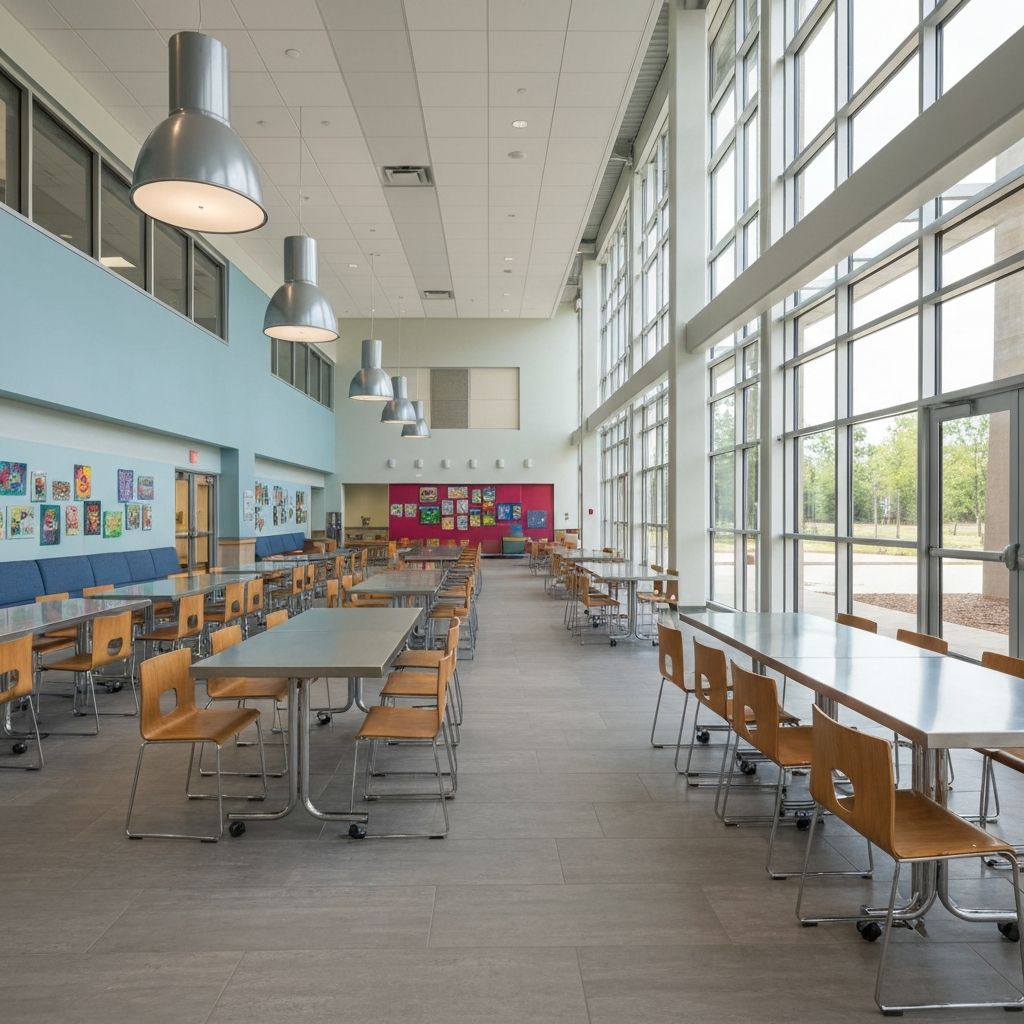
School cafeterias serve multiple purposes beyond meal service. They're gathering spaces, study areas, event venues, and important parts of the school community. Thoughtful furniture selection supports all these functions.
More Than Just a Place to Eat
School cafeterias serve multiple purposes beyond meal service. They're gathering spaces, study areas, event venues, and important parts of the school community. Thoughtful furniture selection supports all these functions.
Calculating Capacity Requirements
Determining Seating Needs
Start with basic calculations:
- Total student population divided by lunch periods = students per period
- Add 10-15% buffer for schedule variations
- Consider staff dining needs
- Account for special events requiring full capacity
Space Allocation
Industry standards suggest:
- 12-15 square feet per seat for comfortable dining
- Clear pathways of at least 4 feet between table rows
- Adequate queuing space near serving areas
- Emergency egress requirements
Table Options and Configurations
Mobile Folding Tables
The most common choice for school cafeterias:
Advantages:
- Quick setup and breakdown
- Easy storage when space is needed for other uses
- Durable construction for daily use
- Various lengths (8', 10', 12') available
Considerations:
- Require staff time for daily setup
- Moving parts need regular maintenance
- Storage space required

Fixed Seating Tables
Tables with attached benches or stools:
Advantages:
- No separate chair management
- Faster cleaning between lunch periods
- Consistent seating capacity
- Reduced theft and vandalism
Considerations:
- Less flexibility for different uses
- May not accommodate all body types
- Difficult to reconfigure
Round Tables
Increasingly popular for creating community atmosphere:
Advantages:
- Encourage conversation and social interaction
- No "head of table" hierarchy
- Attractive appearance
- Work well for smaller groups
Considerations:
- Less space-efficient than rectangular tables
- May not fold for storage
- Higher cost per seat
Seating Considerations
Bench Seating
Traditional and space-efficient:
- Accommodates varying group sizes
- Easy to clean
- Durable construction
- May be uncomfortable for extended sitting
Individual Stools
Attached to table bases:
- Defined seating positions
- Swing-out design saves space
- Easy to count capacity
- Limited comfort for longer periods
Separate Chairs
Maximum flexibility:
- Can be used for other events
- More comfortable options available
- Require more management
- Higher theft risk

Layout Strategies
Traffic Flow
Design for efficient movement:
- Clear paths from entrance to serving area
- Separate entry and exit flows when possible
- Adequate space around trash and recycling stations
- Accessible routes throughout
Supervision Sightlines
Consider staff visibility:
- Avoid tall furniture that blocks views
- Position supervisor stations strategically
- Minimize hidden corners
- Ensure emergency exits are visible
Zoning
Create distinct areas for:
- Quick eating (high tables, stools)
- Social dining (round tables, comfortable seating)
- Quiet zones (individual seating, study-friendly)
- Group gatherings (large tables, flexible space)
Multi-Purpose Considerations
Event Configuration
Plan for assemblies, performances, and gatherings:
- Mobile furniture that stores compactly
- Clear floor space when tables are removed
- Adequate power access for events
- Acoustic considerations
Extended Learning
Support cafeteria as study space:
- Comfortable seating for longer periods
- Adequate lighting
- Power access for devices
- Quieter zones away from kitchen noise
Maintenance and Durability
Material Selection
Choose materials that withstand cafeteria conditions:
- Laminate surfaces resist stains and scratches
- Powder-coated steel frames prevent rust
- Commercial-grade plastics handle heavy use
- Avoid materials that absorb odors
Cleaning Efficiency
Design for quick turnaround between periods:
- Smooth surfaces without crevices
- Chairs that hang on tables for floor cleaning
- Stain-resistant materials
- Easy access to all surfaces
Conclusion
Effective cafeteria furniture planning balances capacity needs, operational efficiency, and student experience. By considering how the space will be used throughout the day and school year, administrators can create dining environments that serve students well while supporting the broader school community.
Tags
