
Opening context
Science lab furniture should reflect what happens in the room. Demonstration-heavy classrooms, collaborative labs, and exam environments all require different balances between fixed worktops, flexible seating, and equipment storage.
Define the teaching model first
Science lab furniture should reflect what happens in the room. Demonstration-heavy classrooms, collaborative labs, and exam environments all require different balances between fixed worktops, flexible seating, and equipment storage.
Build the specification around workflow
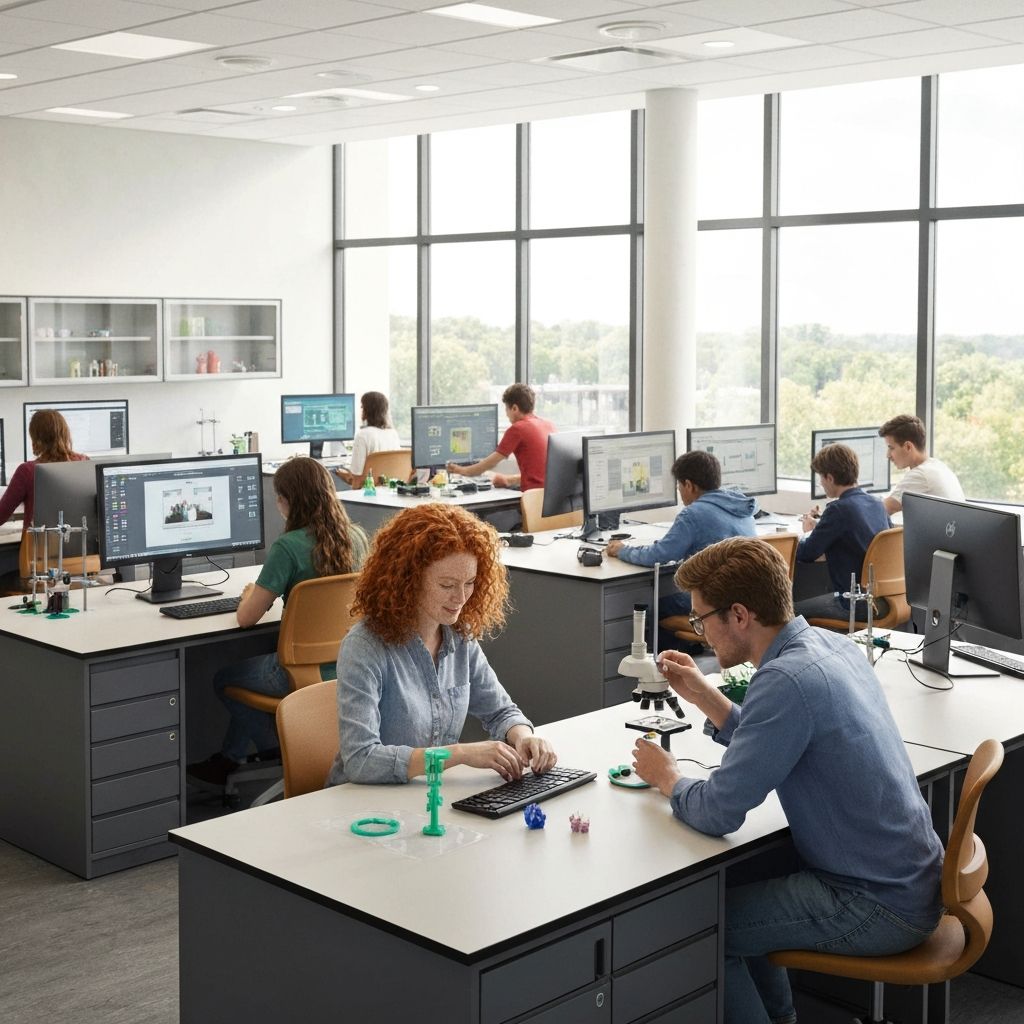
The most reliable lab specifications describe how students, teachers, and equipment move through the room. That prevents clashes between circulation, storage, and utility access.
The specification should explain more than bench sizes. It should define where demonstrations happen, how many students share a station, where bags and consumables go, and whether the room needs to switch between practical sessions and theory teaching. Those choices influence the whole furniture package.
- Separate shared teacher zones from student work areas.
- Confirm whether the room needs flexible reconfiguration or fixed stations.
- Review storage rules for chemicals, supplies, and everyday teaching tools.
- Check whether supervision sightlines remain clear once stools, bags, and mobile equipment are in place.
Match the furniture to the room envelope
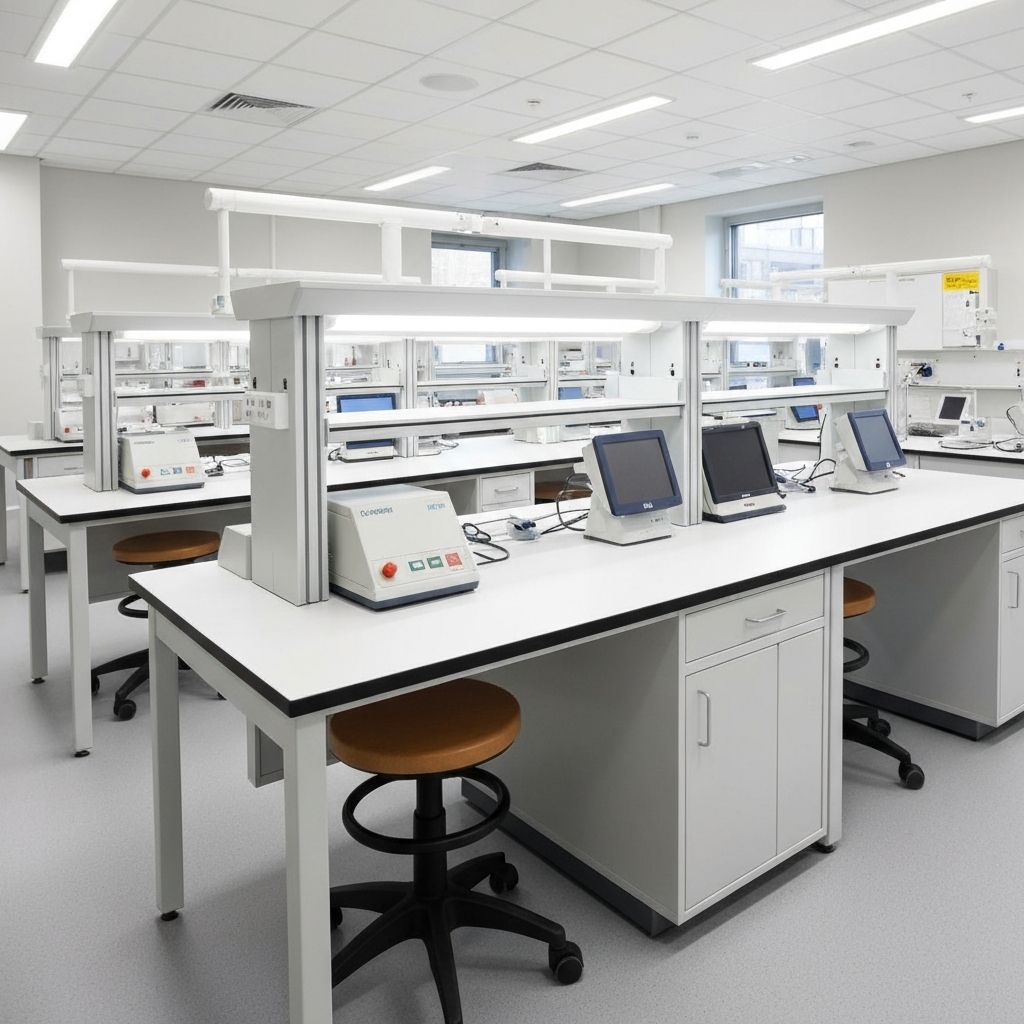
Ceiling services, plumbing points, and wall conditions can all affect the final layout. Buyers should avoid approving furniture packages before those constraints are documented.
Lab rooms create more hidden clashes than standard classrooms. Door swings, sink positions, power drops, floor boxes, extraction points, and fixed columns can all reduce the layout freedom buyers assume they have. The earlier these constraints are documented, the less likely the furniture package will need late revision.
- Check the exact room dimensions and access path for delivery.
- Align bench depth and stool count with the required teaching capacity.
- Verify whether edge protection, shelving, or locking storage are needed.
- Confirm how utilities, waste points, and safety equipment affect the final furniture footprint.
Use one decision package for approvals
Lab projects move faster when the schedule, room plan, and furniture specification travel together. That reduces late questions and keeps the supplier, designer, and school team aligned.
When lab approvals are split between facilities, academic teams, and procurement, it becomes easy for one group to assume another has already checked utilities or storage compliance. Keep the whole decision package together, then compare the resulting brief against science lab room solutions and lab table options before production starts.
Specification details that often get missed
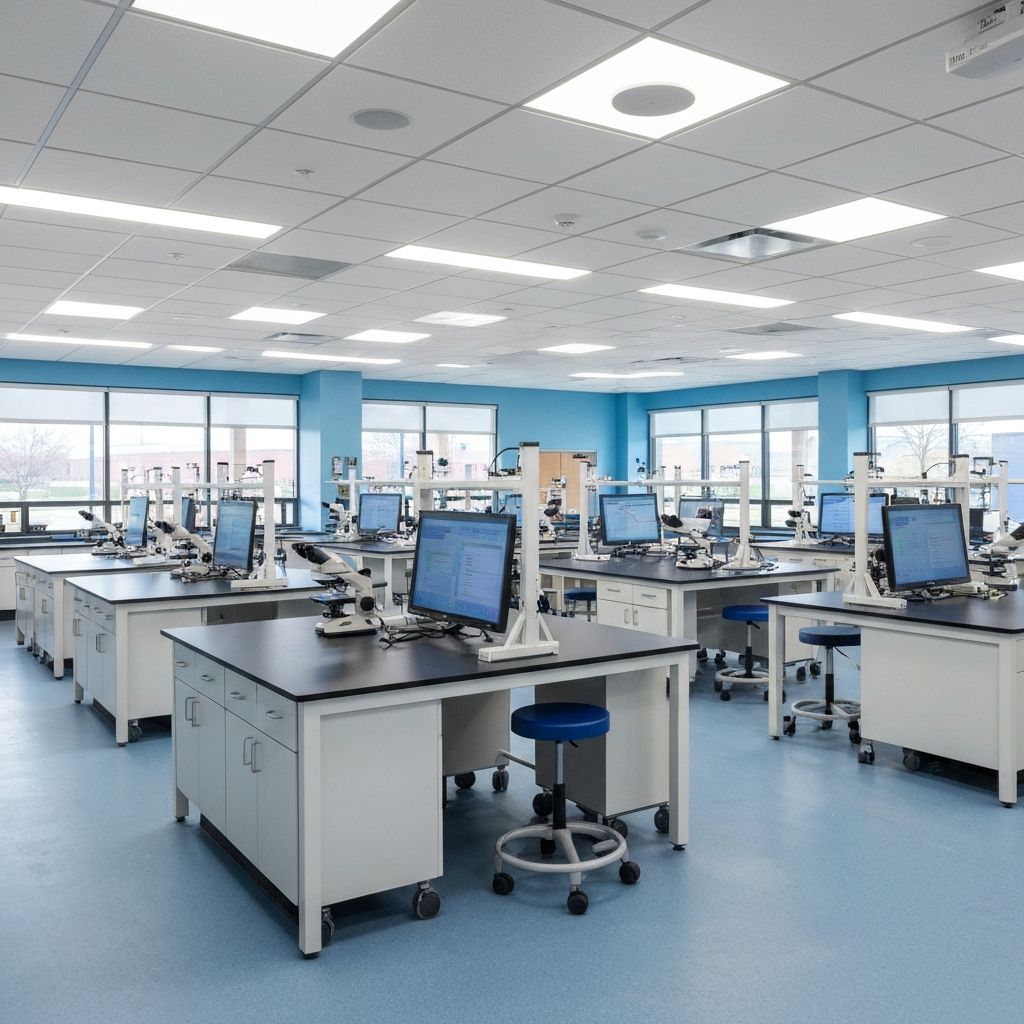
Lab furniture specifications often fail in small details rather than major product choices. A buyer may approve the right table family but forget to confirm stool height, under-bench storage, splash protection, carton access, or whether replacement tops can be ordered later. These details affect installation and maintenance long after the first shipment arrives.
Before final approval, review the following points with the supplier:
- Worktop thickness, edge treatment, and resistance requirements.
- Whether benches are fixed, movable, or supplied as modular groups.
- Stool height, foot ring, glide type, and storage location.
- Cabinet locks, hinges, handles, and ventilation if storage is included.
- Packaging labels by room, floor, or building.
- Spare parts, touch-up items, and repeat-order assumptions.
The goal is to remove hidden assumptions before production. If the school expects room-by-room delivery, the carton plan should say so. If the facilities team expects future replacement tops, the material and dimensions should be documented. If the room has restricted access, delivery dimensions should be checked before packing is finalized.
Coordinating lab furniture with the wider campus order
Science rooms rarely sit outside the broader furniture package. A school may be ordering standard classrooms, storage, library furniture, canteen furniture, and office furniture at the same time. The lab package should still have specialist requirements, but it also needs to fit the same delivery, color, labeling, and approval rhythm as the rest of the project.
For campus-wide orders, keep the lab package visible in the master schedule. Specialist worktops, cabinet configurations, and fixed furniture can require longer review than standard desks and chairs. If those items are approved late, they can hold up the entire room handover even when the rest of the furniture is ready.
Approval documents worth keeping
Lab furniture should leave a clear approval trail. Keep the final room plan, product list, finish references, worktop specification, cabinet layout, stool pairing, carton labeling notes, and inspection expectations in one shared document. That document becomes useful during production, site receiving, and any later repeat order.
If a school group is ordering labs for more than one campus, the approval trail becomes even more important. The first campus may set the standard, but later campuses still need the same worktop reference, hardware detail, and storage logic. Without a saved standard, each repeat order becomes a new negotiation and a new source of inconsistency.
The supplier should be able to work from that approved package without relying on scattered messages. Buyers should ask for confirmation that the factory has the final version before production starts, especially when drawings or room quantities have changed during review.
Connecting the lab brief to quotation accuracy
A lab quotation is only as accurate as the brief behind it. If the buyer only asks for “lab tables,” the supplier has to guess bench depth, stool count, storage needs, material grade, and packing method. Those guesses can make the first quote look simple, then create revisions once the real room requirements appear.
Give the supplier a clearer starting point: number of rooms, student capacity, table layout, teacher demonstration needs, storage expectation, worktop preference, destination country, and any inspection or compliance documents required. That information helps DADA recommend the right product family and avoid pricing a package that will need to be rebuilt later.
Final recommendation
Treat the lab package as an operational system, not a loose list of furniture items. A tighter specification makes it easier to compare science lab room solutions, review lab table options, and consolidate decisions before production starts.
Procurement follow-through
Bring the topic into the project brief
Before requesting school furniture pricing, connect the topic to room scope, product category, quantity, material requirements, sample approval and export delivery assumptions. A clearer brief leads to a more accurate factory quotation and fewer revision cycles.
Procurement questions
What should buyers confirm after reading about specialized spaces?
Confirm the room requirements, product categories, material choices, quantity estimates and quotation questions before requesting pricing.
What should buyers send to DADA after reading this article?
Send room lists, quantities, layouts or reference images, preferred materials, color requirements, target delivery window, destination port and any sample or inspection requirements.
Does this article show fixed product prices?
No. DADA uses inquiry-based project quotation because final pricing depends on quantity, material, size, customization, packaging and destination port.
Tags